
Hear from Our Customers
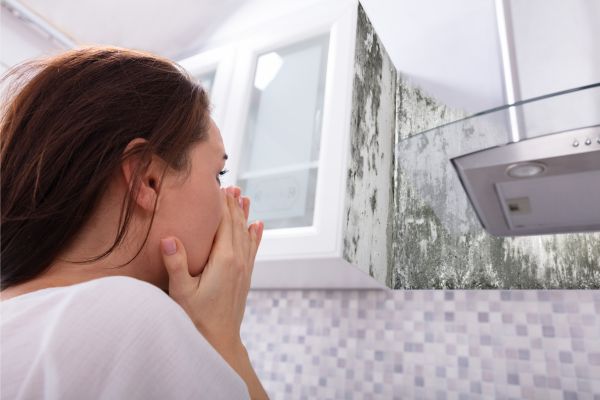
You can’t see mold spores. You might smell something musty in the basement or notice your kids coughing more at night, but that doesn’t tell you what type of mold you’re dealing with or how bad it actually is.
Professional mold testing gives you real answers. We use air sampling and surface testing to measure spore counts, identify species, and pinpoint where moisture is feeding the problem. The samples go to an independent lab, and you get a report that tells you exactly what you’re up against—not a sales pitch.
That clarity matters when you’re deciding whether to remediate, how aggressive to be, or whether your symptoms are actually mold-related. It also matters if you’re buying a home, dealing with a landlord, or filing an insurance claim. You need documentation that holds up.
We work throughout Bucks County, where Pennsylvania’s wet climate and aging housing stock create consistent mold problems. Langhorne Gardens sits in the middle of that—older homes with basements that leak, newer builds with HVAC condensation issues, and humidity that doesn’t quit from May through September.
We’re licensed to perform mold assessments in Pennsylvania, which means we follow state protocols and use certified lab partners. We’ve been doing this long enough to know that most mold problems start small and get expensive when they’re ignored. Our job is to catch them early and tell you what’s actually happening, not what we think you want to hear.
We start by walking through your property and listening to what you’ve noticed—odors, discoloration, health symptoms, water damage. That conversation points us toward problem areas, but we don’t stop there.
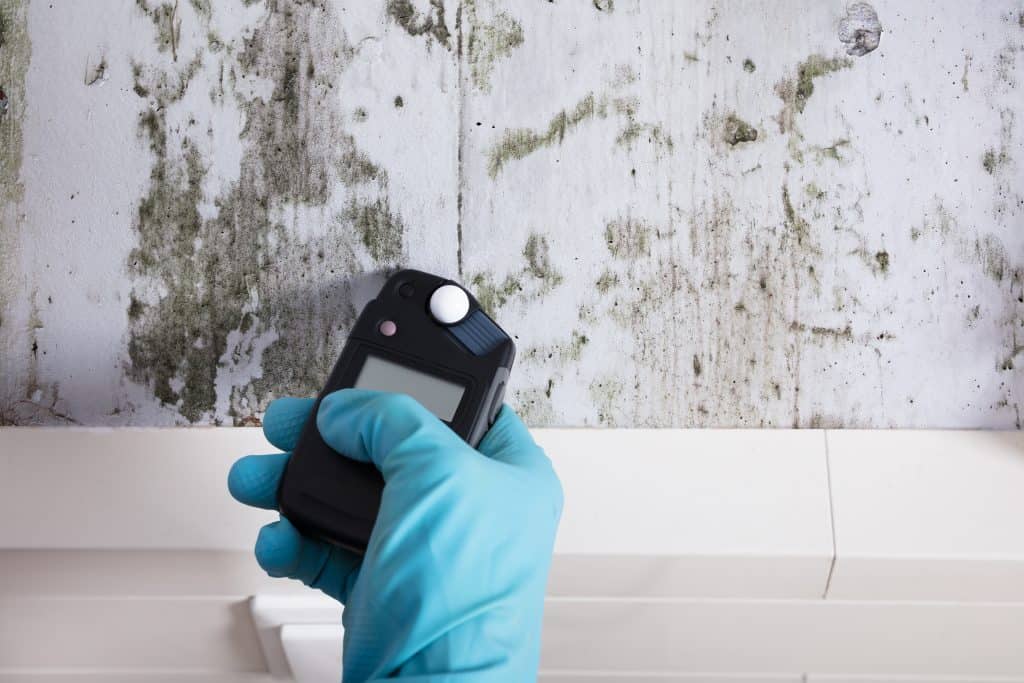
We use moisture meters and infrared cameras to find hidden water intrusion behind walls, under floors, and in crawl spaces. Mold grows where it’s wet, so if we find moisture, we’re finding risk. Then we collect air samples from multiple rooms and take surface samples from any visible growth. Those samples get sent to a certified lab for analysis.
The lab report comes back with spore counts, species identification, and concentration levels. We review it with you in plain terms—what’s growing, where it’s worst, and what the health risks are. If remediation is needed, we map out the scope. If it’s minor, we’ll tell you that too. You’ll know what you’re dealing with and what it’s going to take to fix it.
Ready to get started?
A residential mold testing service from us includes a full visual inspection, moisture mapping with professional-grade equipment, air quality sampling from multiple zones, and surface sampling where needed. Every sample is analyzed by an EPA-certified lab, and you receive a detailed report with spore counts and species identification.
We also identify the moisture source. In Langhorne Gardens, that’s often basement seepage from groundwater, roof leaks that go unnoticed for months, or HVAC systems that aren’t draining properly. Pennsylvania’s older homes weren’t built with the same moisture barriers modern codes require, so water finds its way in. We locate it, document it, and explain how it’s feeding mold growth.
You’ll also get a written assessment that outlines remediation needs if mold levels are elevated. That documentation is critical if you’re negotiating a home sale, working with insurance, or just trying to understand whether your DIY cleanup plan is realistic. Most people underestimate how much mold spreads behind the scenes, and a black mold test often reveals contamination well beyond what’s visible on a bathroom ceiling.
Most mold inspections in Bucks County run between $300 and $600, depending on the size of your home and how many samples we need to collect. If you’ve got a small area of visible mold and just want confirmation of the species, that’s on the lower end. If you’re testing a whole house because you’re buying it or dealing with mystery health symptoms, expect the higher range.
The cost covers the inspection itself, lab analysis, and a written report. Some companies charge separately for air samples vs. surface samples, so ask up front what’s included. We don’t upsell you on unnecessary testing, but we also won’t skip steps that matter. If your insurance covers mold testing—and some policies do if the mold resulted from a covered event like a burst pipe—we can provide the documentation you need to file a claim.
Testing costs a lot less than remediation, and it’s the only way to know if remediation is even necessary. DIY test kits from the hardware store won’t give you spore counts or species identification, so they can’t tell you if you’re dealing with harmless mold or something that needs immediate attention.
Air sampling measures how many mold spores are floating around in the air you’re breathing. We collect samples from different rooms using a pump that pulls air through a collection device, then send those to the lab. The lab counts spores per cubic meter and identifies species. High spore counts mean you’re being exposed even if you don’t see mold growing anywhere.
Surface sampling tests visible growth or staining to identify what species is colonizing your walls, ceiling, or belongings. We swab or tape-lift a sample and send it for analysis. This tells you whether that black stuff in your shower is toxic black mold (Stachybotrys) or just common mildew.
You usually need both. Air sampling catches hidden mold that’s releasing spores from inside walls or ductwork. Surface sampling confirms what’s growing in the spots you can see. Together, they give you the full picture—what’s in your air, what’s on your surfaces, and how bad the contamination is. In Langhorne Gardens, where basements and crawl spaces stay damp, air sampling often reveals problems that surface testing alone would miss.
Lab results typically come back in three to five business days after we collect samples. The lab needs time to culture the samples, count spores, and identify species under a microscope. Some labs offer rush processing for an extra fee if you’re in a time crunch—like closing on a house or dealing with a severe health reaction.
Once we get the results, we’ll call you to go over the findings. We don’t just email you a report full of scientific terms and leave you to figure it out. We explain what the spore counts mean, which species were found, and whether the levels are elevated compared to outdoor air. Outdoor air always has some mold spores, so the lab compares your indoor levels to a baseline. If your indoor counts are significantly higher, that’s a red flag.
After we review the results, we’ll send you the full written report. You can share that with contractors, insurance adjusters, or your doctor if needed. The timeline from inspection to final report is usually about a week, but the actual lab turnaround is the biggest variable. We work with certified labs that prioritize accuracy over speed, because wrong results are worse than slow ones.
DIY kits will tell you if mold is present, but they won’t tell you how much, what type, or whether it’s a health risk. Most kits have you set out a petri dish for a few days, then mail it to a lab. The problem is that mold spores are everywhere—inside and outside—so those dishes will always grow something. That doesn’t mean you have a mold problem.
Professional testing measures concentration. We’re looking at spore counts per cubic meter of air and comparing that to outdoor levels. If your indoor air has ten times the spore count of outdoor air, you’ve got active growth somewhere. A DIY kit can’t give you that context. It also can’t identify species reliably, so you won’t know if you’re dealing with allergenic mold or toxic mold.
The other issue is that DIY kits don’t include a moisture investigation. Mold is a symptom—moisture is the disease. If you confirm mold with a kit but don’t find the water source, you’re just going to have mold again in six months. We use thermal imaging and moisture meters to track down leaks, condensation, and humidity problems that feed mold growth. That’s not something you can do with a $40 kit from the hardware store. If you’re serious about knowing what’s in your home, professional mold testing is the only option that gives you actionable information.
The most common species we find in Bucks County are Cladosporium, Penicillium, Aspergillus, and Stachybotrys. Cladosporium grows on wood, drywall, and fabrics—it’s usually olive-green or black and thrives in damp basements and attics. Penicillium is the blue-green mold you see on old food, but it also colonizes water-damaged drywall and insulation. Both are allergenic and can trigger respiratory symptoms.
Aspergillus is another frequent find, especially in HVAC systems and poorly ventilated bathrooms. Some species of Aspergillus produce mycotoxins, which are more concerning for people with weakened immune systems. Stachybotrys—commonly called black mold—is the one that gets the most attention. It’s toxic and grows on materials with high cellulose content, like drywall and wood, after prolonged water exposure. It’s less common than the others, but when we find it, remediation is non-negotiable.
Pennsylvania’s humidity and older housing stock create ideal conditions for all of these. Langhorne Gardens has a mix of mid-century homes and newer construction, and both have vulnerabilities. Older homes have poor vapor barriers and aging plumbing. Newer homes are built tight for energy efficiency, which traps moisture if ventilation isn’t adequate. We can identify which species you’re dealing with and tailor the remediation approach accordingly.
It depends on what caused the mold. If mold resulted from a sudden, covered event—like a burst pipe, roof damage from a storm, or an appliance leak—most policies will cover testing and remediation. If mold developed because of long-term neglect, poor maintenance, or chronic humidity issues, insurance typically won’t pay.
The key is documentation. If you file a claim, the insurance adjuster will want proof that the mold came from a covered peril and that you acted quickly to mitigate damage. That’s where professional mold testing helps. Our lab reports and inspection documentation show what species are present, how extensive the contamination is, and whether the timeline matches your claim. Adjusters trust third-party lab results more than homeowner photos.
Some policies explicitly exclude mold coverage or cap payouts at $10,000 or less. Read your policy or call your agent before you assume you’re covered. If you’re buying a home in Langhorne Gardens and the inspection reveals mold, you can sometimes negotiate for the seller to pay for testing and remediation as a condition of sale. Either way, having us document the problem gives you leverage—whether you’re dealing with an insurance company, a seller, or a landlord who’s been ignoring your complaints.
Other Services we provide in Langhorne Gardens